
5 hadiths on Friday and Jumu‘ah prayer
Preparing for Friday, listening to the sermon and supplicating to Allah: five hadiths explained.
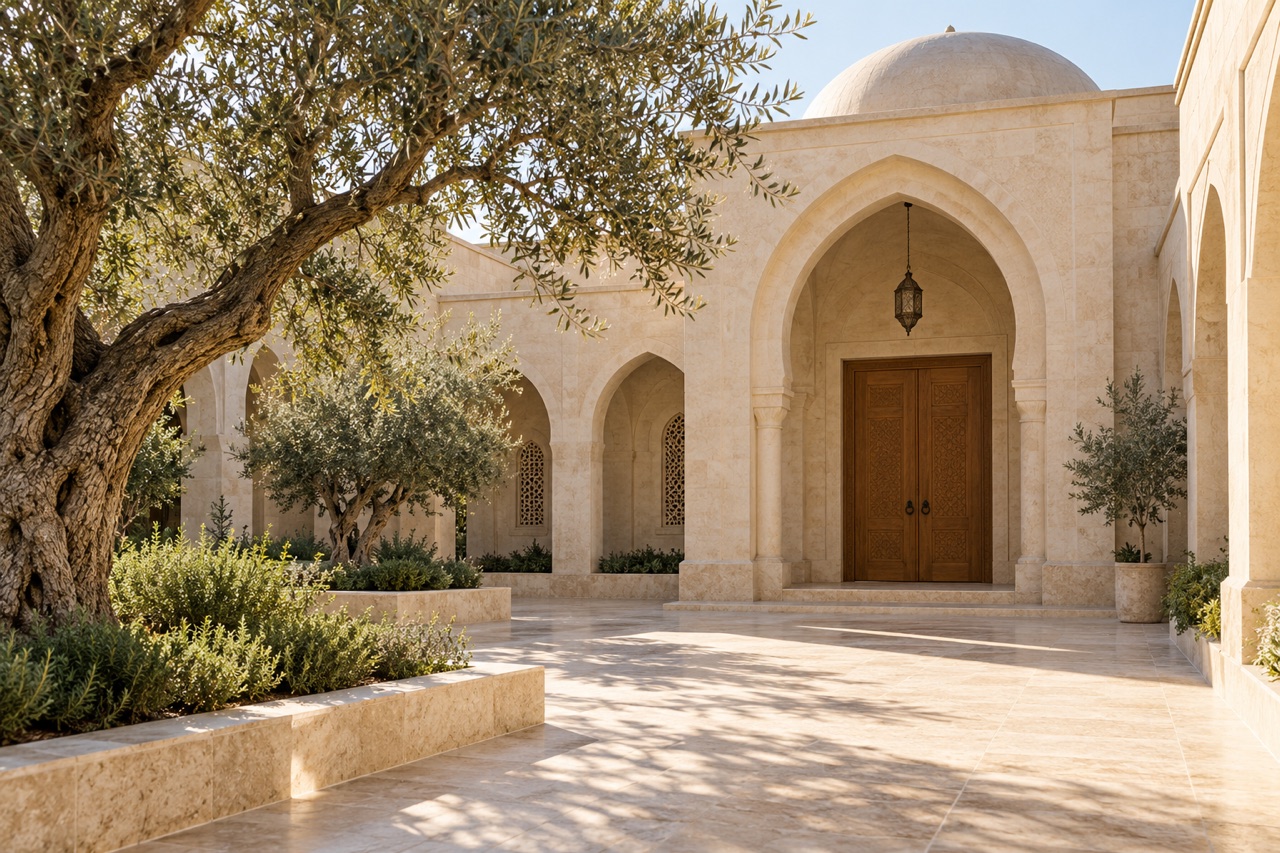
Friday, or Jumu‘ah, returns each week with congregational prayer and a sermon. The selected hadiths discuss its value, preparation, consideration for other worshippers and supplication.
For someone attending, preparation does not begin only when the imam speaks: it also concerns cleanliness, the journey and how to take a place. The conditions of obligation, exemptions and work situations are not detailed here.
Article contents
Why Friday is a special day
The context of the narration
Abu Hurayrah reports that the Prophet ﷺ spoke about Friday, recalling Adam’s creation, his entry into Paradise and his departure from it. The account also mentions that the Hour will occur on a Friday. It begins:“The best day on which the sun has risen is Friday.”
Read the Arabic text
خَيْرُ يَوْمٍ طَلَعَتْ عَلَيْهِ الشَّمْسُ يَوْمُ الْجُمُعَةِ
Understanding this hadith
This saying explains the special attention given to Friday. The account connects it with Adam’s history and the Hour; it does not present it merely as a break in the week.
The account mentions the coming of the Hour but gives no date for predicting the end of the world. It therefore does not support circulating a message that announces such a date.
For someone whose weeks seem alike, marking this day can begin with simple organisation: check the sermon time, prepare what you need before leaving and keep some time for supplication.
Preparing and not disturbing worshippers
The context of the narration
Salman al-Farisi transmits a saying of the Prophet ﷺ combining several actions before and during Friday prayer: bathing, purifying oneself, using one’s oil or perfume from home, then going to the mosque with consideration for others. The text brings these actions together in the following promise:“A man who bathes on Friday, purifies himself as much as he can, uses some of his oil or perfume from his home, then goes out without separating two people, prays what he is granted to pray, then listens silently when the imam speaks, will be forgiven what lies between that Friday and the other Friday.”
Read the Arabic text
لاَ يَغْتَسِلُ رَجُلٌ يَوْمَ الْجُمُعَةِ، وَيَتَطَهَّرُ مَا اسْتَطَاعَ مِنْ طُهْرٍ، وَيَدَّهِنُ مِنْ دُهْنِهِ، أَوْ يَمَسُّ مِنْ طِيبِ بَيْتِهِ ثُمَّ يَخْرُجُ، فَلاَ يُفَرِّقُ بَيْنَ اثْنَيْنِ، ثُمَّ يُصَلِّي مَا كُتِبَ لَهُ، ثُمَّ يُنْصِتُ إِذَا تَكَلَّمَ الإِمَامُ، إِلاَّ غُفِرَ لَهُ مَا بَيْنَهُ وَبَيْنَ الْجُمُعَةِ الأُخْرَى
Understanding this hadith
The text does not separate personal preparation from respect for those already present. Being clean and perfumed does not give permission to force your way through or take a place by moving two worshippers apart.
Allowing enough time to prepare reduces the risk of arriving tense and making others bear your lateness. Once there, looking for an available place without insisting on the one you would have preferred reflects this consideration.
The promise of forgiveness is read alongside the qualification in Muslim 233c, presented below. It encourages complete and attentive preparation; it does not remove the need to abandon wrongdoing or repair a harm.
Even saying “listen” can interrupt the sermon
The context of the narration
Abu Hurayrah reports a warning from the Prophet ﷺ about the time when the imam delivers the sermon. The example chosen is not a long conversation: it is telling a neighbour to be quiet and listen.“If you say to your companion on Friday, “Listen,” while the imam is delivering the sermon, you have engaged in idle speech.”
Read the Arabic text
إِذَا قُلْتَ لِصَاحِبِكَ يَوْمَ الْجُمُعَةِ أَنْصِتْ وَالإِمَامُ يَخْطُبُ فَقَدْ لَغَوْتَ
Understanding this hadith
The example shows how carefully listening is protected. Even words that seem useful can become an interruption when spoken during the sermon. Trying to silence everyone aloud risks adding your own noise to the noise you regret.
Before the beginning, silencing your phone and finishing conversations avoid foreseeable distractions. During the sermon, attention can return to what is being said rather than the conversations around you.
The words translated as “idle speech” render laghw, vain or inappropriate speech. This passage alone does not say that the prayer is invalidated.
Also read: choosing a good word or silence.
A moment on Friday when a request is answered
The context of the narration
Abu Hurayrah relates that the Prophet ﷺ mentioned a particular moment on Friday. After describing it, he gestured with his hand to indicate its brevity:“There is a moment in it which no Muslim servant encounters while standing in prayer, asking Allah for something, without Him granting it.”
Read the Arabic text
فِيهِ سَاعَةٌ لاَ يُوَافِقُهَا عَبْدٌ مُسْلِمٌ، وَهْوَ قَائِمٌ يُصَلِّي، يَسْأَلُ اللَّهَ تَعَالَى شَيْئًا إِلاَّ أَعْطَاهُ إِيَّاهُ
Understanding this hadith
The promise invites us to ask with hope. The quoted version describes the believer in prayer and does not name a time that could be shown on a clock. The word sa‘ah here means a moment; it does not necessarily mean sixty minutes.
Other texts are studied to identify this moment, with discussion among scholars. This guide does not turn this version alone into certainty about a precise time slot. It is enough to encourage making room for supplication on Friday.
You can prepare a request whose meaning you understand: forgiveness, guidance, help for someone close to you or good in this life and the next.
Also read: supplicating without concluding too quickly that you have not been answered.
The promise of forgiveness retains a condition
The context of the narration
Abu Hurayrah transmits a teaching of the Prophet ﷺ that brings together the five daily prayers, Fridays and the months of Ramadan. It specifies the scope of their expiation:“The five prayers, one Friday to the next and one Ramadan to the next expiate what lies between them, when major sins are avoided.”
Read the Arabic text
الصَّلَوَاتُ الْخَمْسُ وَالْجُمُعَةُ إِلَى الْجُمُعَةِ وَرَمَضَانُ إِلَى رَمَضَانَ مُكَفِّرَاتٌ مَا بَيْنَهُنَّ إِذَا اجْتَنَبَ الْكَبَائِرَ
Understanding this hadith
The final clause belongs to the reported saying. Removing it would suggest an unconditional promise. The return of prayers and Friday is an opportunity for forgiveness, but it does not allow someone to plan a wrongdoing while counting on the following Friday.
If a person has been wronged, acknowledging what you have done and seeking to repair it remain real concerns. Attending the sermon does not by itself return stolen property to its owner or erase a debt from the accounts of the person owed it.
Before the next Friday, check whether you need to return a borrowed item or correct false information you gave. Attending prayer does not settle these wrongs for you.
In practice
- You always leave at the last momentPrepare your belongings and check the time before Friday so you can arrive without pushing past others.Read the actions mentioned by Salman
- You lose track of the sermonSilence your phone before it begins and leave conversations until afterwards.Reread the advice on listening
- You want to supplicate moreChoose a request whose meaning you understand, without deriving a certain time from this version.Read the reported promise
Sources
- Sahih Muslim · 854bWhy Friday is a special day
- Sahih al-Bukhari · 883Preparing and not disturbing worshippers
- Sahih al-Bukhari · 934Even saying “listen” can interrupt the sermon
- Sahih al-Bukhari · 935A moment on Friday when a request is answered
- Sahih Muslim · 233cThe promise of forgiveness retains a condition