
5 hadiths on gratitude
and thankfulness
Thanking Allah after a meal, praying out of gratitude and sharing what we have received.
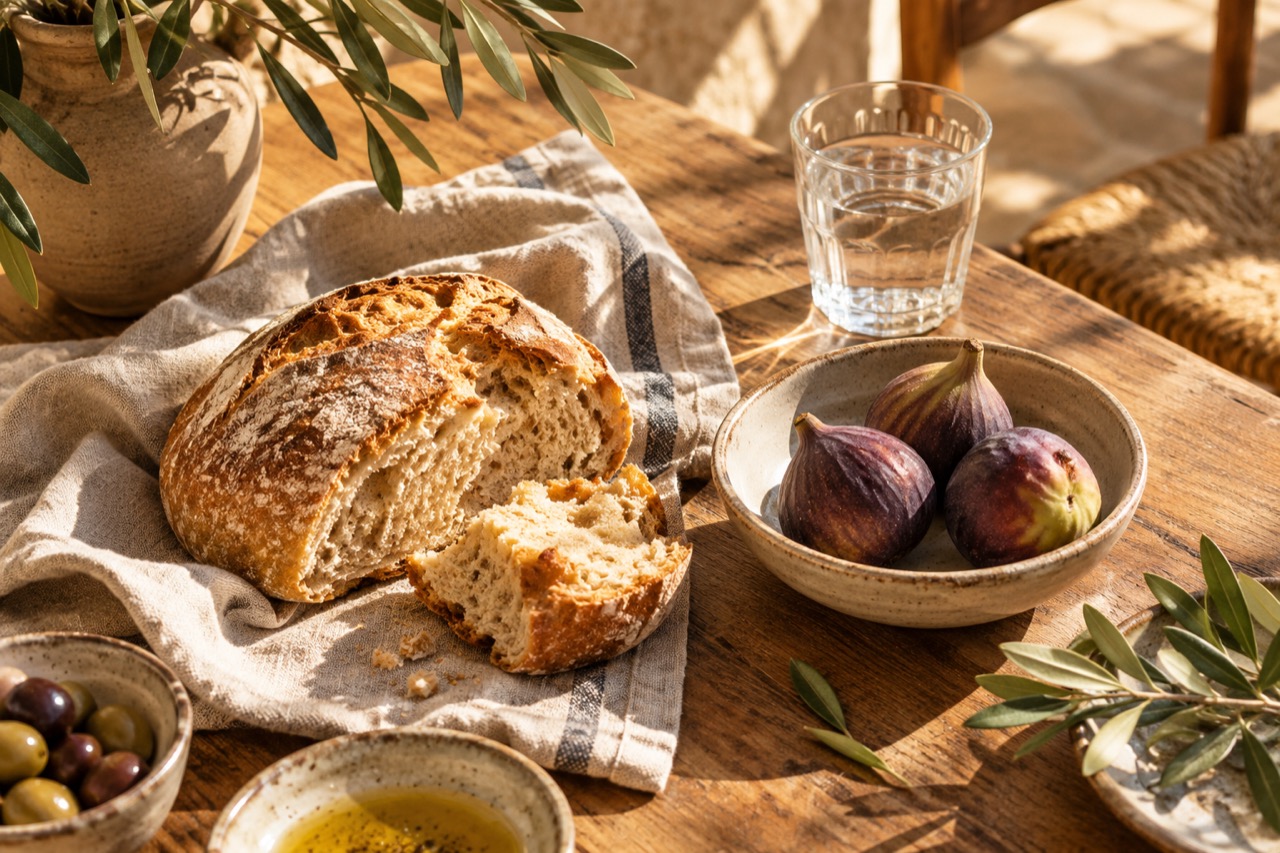
How can we thank Allah for what we receive each day? And how can we stop looking only at what others have more of?
These five authentic hadiths on gratitude, reported by al-Bukhari and Muslim, concern shukr, thankfulness: praising Allah after a meal, praying to thank Him, using our time and helping the person who asks.
Article contents
Thanking Allah after eating or drinking
The context of the narration
Anas ibn Malik reports this teaching of the Messenger of Allah ﷺ about two daily actions: eating and drinking. He says:إِنَّ اللَّهَ لَيَرْضَى عَنِ الْعَبْدِ أَنْ يَأْكُلَ الأَكْلَةَ فَيَحْمَدَهُ عَلَيْهَا أَوْ يَشْرَبَ الشَّرْبَةَ فَيَحْمَدَهُ عَلَيْهَا
“Allah is pleased with the servant who eats a meal and praises Him for it, or drinks a drink and praises Him for it.”
Understanding this hadith
The hadith connects Allah’s pleasure with the servant’s praise after a meal or a drink. It does not reserve this gratitude for an exceptional event: eating and drinking are already occasions for it.
Saying al-hamdu lillah, “praise belongs to Allah”, allows us to thank Him for this meal. Taking time to understand these words helps avoid saying them solely out of habit.
Also read: praise and good manners at meals.
Why did the Prophet pray so much when he had already been forgiven?
The context of the narration
‘Aishah relates that the Prophet ﷺ prayed at night until his feet cracked. She asked why he made such an effort when Allah had forgiven his past and future sins. He replied:“Should I not love to be a grateful servant?”
Read the Arabic text
أَفَلاَ أُحِبُّ أَنْ أَكُونَ عَبْدًا شَكُورًا
Understanding this hadith
The word shakur here describes a deeply grateful servant. In this account, gratitude takes the form of prayer. You can recall this intention when you pray, thinking of a blessing for which you wish to thank Allah.
The account describes the Prophet’s effort; it does not ask us to pray until we hurt ourselves. Physical pain is not a measure of gratitude, particularly for someone whose illness limits movement.
Muslim 2999 brings these two attitudes together: giving thanks in ease and being patient in difficulty.
Comparisons can make us forget what we have received
The context of the narration
Abu Hurayrah reports this advice of the Prophet ﷺ. Another version of the same teaching, Muslim 2963a, mentions comparisons concerning wealth and physical build. It is in this domain that the perspective recommended here is understood:“Look at those who have less than you, and do not look at those who have more than you: this is more likely to keep you from belittling Allah’s blessing.”
Read the Arabic text
انْظُرُوا إِلَى مَنْ أَسْفَلَ مِنْكُمْ وَلاَ تَنْظُرُوا إِلَى مَنْ هُوَ فَوْقَكُمْ فَهُوَ أَجْدَرُ أَنْ لاَ تَزْدَرُوا نِعْمَةَ اللَّهِ
Understanding this hadith
The hadith itself states the advice’s purpose: not taking Allah’s blessings lightly. When attention stays fixed on what is missing compared with others, what you already possess risks no longer counting. A home, a meal or a useful ability can lose all value in our eyes because someone seems better provided for.
“Those who have less” does not mean people of lesser worth. The comparison concerns circumstances and advantages received. It does not rank human dignity.
If accounts showing travel, purchases or appearances always leave you dissatisfied, stop following them for a while. You will have fewer opportunities to compare your daily life with what they show.
This advice addresses our own perspective. Throwing it at someone suffering—“others have it worse”—may close a conversation when they need to be heard. Recognising a blessing does not make injustice acceptable or prevent seeking to improve your situation.
Not wasting your health and free time
The context of the narration
Ibn ‘Abbas transmits a brief saying of the Prophet ﷺ about two blessings people may possess without using them well:“There are two blessings from which many people fail to benefit: health and free time.”
Read the Arabic text
نِعْمَتَانِ مَغْبُونٌ فِيهِمَا كَثِيرٌ مِنَ النَّاسِ، الصِّحَّةُ وَالْفَرَاغُ
Understanding this hadith
The Arabic word maghbūn describes someone who loses out in a transaction. Here, the loss is having health and free time without using them to do good.
If you have a moment and the necessary strength today, you can devote them to prayer, learning or help a relative is waiting for. Choosing a specific act moves beyond the vague wish to “do better someday”.
This does not turn every minute into an obligation to produce. Resting, preserving strength and giving time to loved ones belong to the needs of human life. The hadith does not say that rest is wasted time.
Someone ill, an exhausted parent or a person carrying a heavy daily burden does not have the same room as a rested person. Choose what you can do with the time and strength available to you.
Healed and made wealthy, he does not forget what Allah gave him
The context of the narration
Abu Hurayrah reports an account of the Prophet ﷺ concerning three men among the Children of Israel: one with a skin disease, another with baldness and the third blind. Allah tests them. An angel comes to them; they obtain the healing they desired and receive livestock, which multiply.
The angel then returns in the appearance of a man in need. The first two refuse to help and claim to have inherited their wealth. From the third, he asks for a sheep to continue his journey. The man whose sight has been restored answers:
“I was blind and Allah restored my sight. Take whatever you wish and leave whatever you wish.”
Read the Arabic text
قَدْ كُنْتُ أَعْمَى فَرَدَّ اللَّهُ إِلَىَّ بَصَرِي فَخُذْ مَا شِئْتَ وَدَعْ مَا شِئْتَ
Understanding this hadith
The angel then reveals that they were tested and announces Allah’s pleasure with him, unlike his two companions. The quoted answer is the man’s in the account: he acknowledges what Allah granted him and shows willingness to give.
The first two men claim to have inherited their wealth and refuse to help the traveller. The third acknowledges that Allah restored his sight and agrees to share. All received; their responses to the request for help differ.
If you wish to help someone, start from their need and what you can give: pay for shopping, lend equipment or devote time to a service. Take your household’s needs into account too.
The account does not establish that every grateful person will become rich, or that illness reveals the sufferer’s ingratitude. The three men are tested after being healed and enriched: what will they do with what they received?
In practice
- You are looking for a first actionAfter a meal or drink, take a moment to praise Allah while thinking of the blessing received.Read the hadith on praise
- Comparisons exhaust youIf an account constantly pushes you to compare your possessions with theirs, stop following it for a while.Reread the advice on comparisons
- You keep putting things offChoose something you have been postponing: learning a supplication, calling a relative or doing a favour.Read the hadith on time and health
- You would like to share a blessingChoose practical help you can offer without putting your household in difficulty.Discover the account of the three men
Sources
- Sahih Muslim · 2734aPraising Allah every day
- Sahih al-Bukhari · 4837Praying out of gratitude
- Sahih Muslim · 2963cComparing blessings
- Sahih al-Bukhari · 6412Health and free time
- Sahih Muslim · 2964Remembering and sharing
This version explicitly mentions wealth and physical constitution: Sahih Muslim 2963a and its context of comparison.
Back to the start ↑