
3 hadiths on meals and good manners
Mentioning Allah, eating what is in front of you, not criticising a dish and giving thanks after a meal: three hadiths with their context.
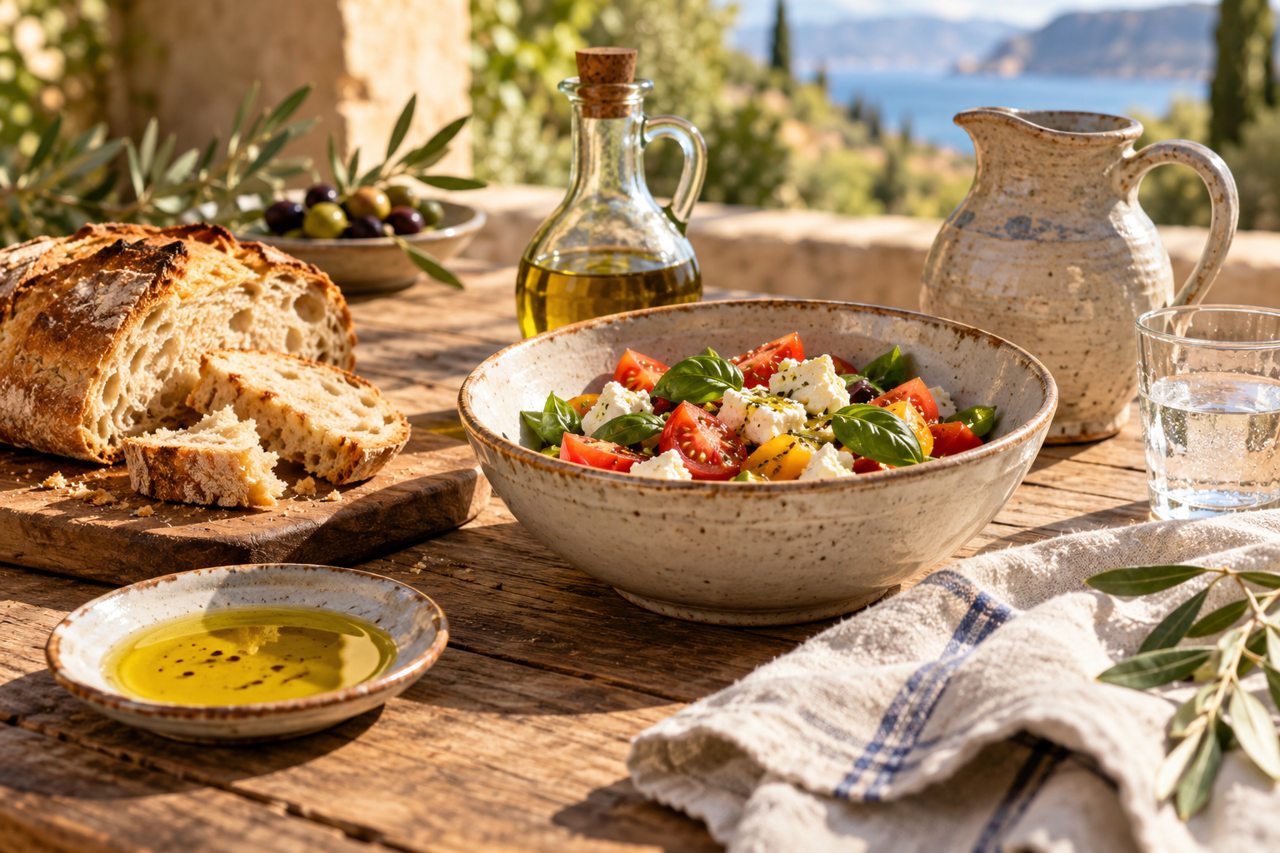
Good manners at meals concern what we do with our hands, what we say about a dish and gratitude to Allah. They appear in very simple accounts: a child eating from a shared dish, the Prophet ﷺ faced with food he enjoys or leaves, and a servant praising Allah after eating or drinking.
These three hadiths help approach a family meal without turning the table into a succession of reproaches. They give specific words and actions to learn.
Article contents
Mentioning Allah and eating what is in front of you
The context of the narration
‘Umar ibn Abi Salamah relates that he was a boy in the care of the Messenger of Allah ﷺ. During a meal, his hand went all around the dish. The Prophet then gave him three instructions. ‘Umar explains that he kept this way of eating thereafter.“Boy, mention Allah’s name, eat with your right hand and eat what is in front of you.”
Read the Arabic text
يَا غُلاَمُ سَمِّ اللَّهَ، وَكُلْ بِيَمِينِكَ وَكُلْ مِمَّا يَلِيكَ
Understanding this hadith
The meal is shared: the child’s hand moves around the dish. The final instruction responds directly to that situation. It teaches him to take the food near him rather than reaching across the dish in front of others.
The Prophet ﷺ does not merely tell him his behaviour is wrong. He names what he should do: mention Allah, use his right hand and eat in front of him. The child therefore receives guidance he can put into practice immediately. His recollection shows that this teaching stayed with him afterwards.
With a child, a short instruction at the relevant moment may be easier to understand than a lengthy reproach after the meal. Show them the part of the dish reachable from their place and give them time to learn.
Also read: teaching a child what to do at mealtimes.
Not criticising a dish you dislike
The context of the narration
Abu Hurayrah describes the conduct of the Prophet ﷺ towards food.“The Prophet ﷺ never criticised food. If he wanted it, he ate it; if he disliked it, he left it.”
Read the Arabic text
مَا عَابَ النَّبِيُّ صلى الله عليه وسلم طَعَامًا قَطُّ، إِنِ اشْتَهَاهُ أَكَلَهُ، وَإِنْ كَرِهَهُ تَرَكَهُ
Understanding this hadith
The Prophet ﷺ ate food he liked and left food he did not like. There is therefore no request to force yourself to enjoy every taste: the conduct described is refraining from disparaging the food.
Around a table, a contemptuous comment can hurt the person who prepared the meal and spoil the enjoyment of those who like it. Simply saying that you will not have any avoids turning your taste into a judgement on someone else’s work. You can thank them for preparing it without pretending to like what you dislike.
Necessary information remains different from mockery: calmly pointing out an ingredient to which you are allergic, for example, does not serve the same purpose as ridiculing the meal. The account offers a model of restraint and respect without requiring concealment of what must be known to eat safely and comfortably.
Also read: asking before bringing someone along to a meal.
Praising Allah after eating or drinking
The context of the narration
Anas ibn Malik transmits a saying of the Messenger of Allah ﷺ about Allah’s pleasure with the servant who praises Him for what they have eaten or drunk.“Allah is pleased with the servant who eats a meal and then praises Him for it, or drinks a drink and then praises Him for it.”
Read the Arabic text
إِنَّ اللَّهَ لَيَرْضَى عَنِ الْعَبْدِ أَنْ يَأْكُلَ الأَكْلَةَ فَيَحْمَدَهُ عَلَيْهَا أَوْ يَشْرَبَ الشَّرْبَةَ فَيَحْمَدَهُ عَلَيْهَا
Understanding this hadith
The hadith mentions both eating and drinking. After either, the servant thanks Allah for what they have just received.
Saying al-hamdu lillah, “praise be to Allah”, expresses that gratitude. The quoted passage announces Allah’s pleasure; it does not reserve praise for a feast or a meal we particularly enjoyed. A very simple meal also gives reason to give thanks.
Gratitude to Allah can accompany consideration for those present: thanking the cook, helping clear the table or preparing food in turn are practical actions.
Also read: the same hadith explained from the perspective of gratitude.
In practice
- You are eating from a shared dishTake the food in front of you and calmly show the child where to help themselves.Reread the three instructions
- You do not like a dishLeave it without a contemptuous comment and thank your host for the welcome.Read about the Prophet’s conduct
- You finish eating or drinkingTake time to praise Allah for what you have just received.Reread the hadith on praise
Sources
- Sahih al-Bukhari · 5376Mentioning Allah and eating what is in front of you
- Sahih al-Bukhari · 5409Not criticising a dish you dislike
- Sahih Muslim · 2734aPraising Allah after eating or drinking