
Siwak: three hadiths on when to use it
Using the siwak at prayer, when rising at night and on returning home: three practices reported in Sahih al-Bukhari and Sahih Muslim.
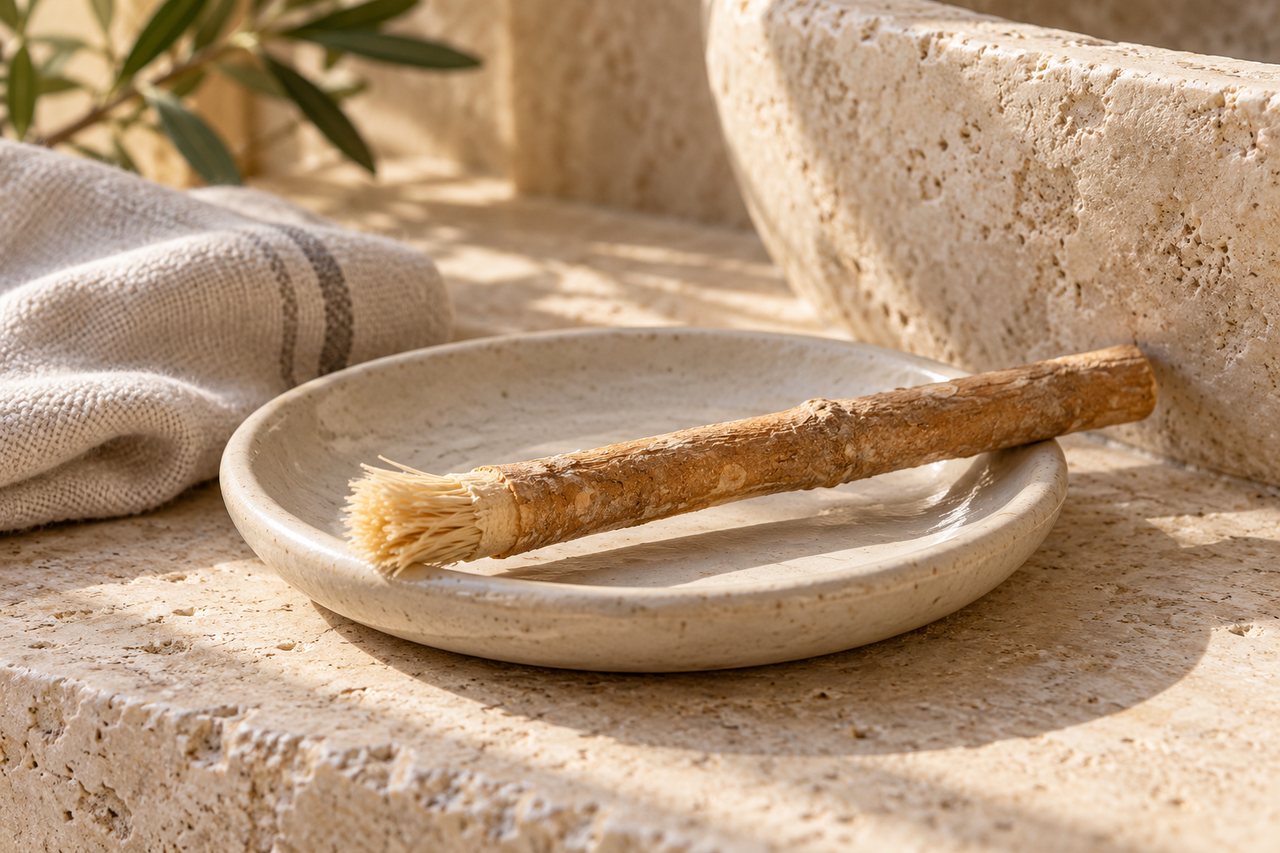
When did the Prophet ﷺ use the siwak, the twig used to clean the mouth? The following accounts mention prayer, rising at night and entering the home.
The first hadith also explains why he did not make its use obligatory at every prayer: he feared causing hardship for his community.
Article contents
The siwak in connection with every prayer
The context of the narration
Abu Hurayrah reports a saying of the Messenger of Allah ﷺ about the siwak. He expresses the importance of this practice while explaining why he did not want to make it a burden for his community.“Were it not that I would make things difficult for my community—or for the people—I would command them to use the siwak at every prayer.”
Read the Arabic text
لَوْلاَ أَنْ أَشُقَّ عَلَى أُمَّتِي ـ أَوْ عَلَى النَّاسِ ـ لأَمَرْتُهُمْ بِالسِّوَاكِ مَعَ كُلِّ صَلاَةٍ
Understanding this hadith
The Prophet ﷺ says he would have ordered siwak at every prayer had he not feared hardship for his community. That qualification is part of the hadith: “at every prayer” alone cannot be used to make it a condition of valid prayer.
For someone who wishes to follow this habit, preparing for prayer is an easy time to remember it. Keeping your siwak clean and within reach helps you remember without turning forgetfulness into a reason to delay prayer.
This text appears in the Book of Friday Prayer, but its wording says “at every prayer”. Its advice is therefore not limited to Fridays.
Also read: giving prayer its proper time.
Cleaning the mouth when rising at night
The context of the narration
Hudhayfah describes a habit of the Prophet ﷺ when he rose during the night.“When the Prophet ﷺ rose at night, he would clean his mouth with the siwak.”
Read the Arabic text
كَانَ النَّبِيُّ صلى الله عليه وسلم إِذَا قَامَ مِنَ اللَّيْلِ يَشُوصُ فَاهُ بِالسِّوَاكِ
Understanding this hadith
The account places this action at the time of rising at night. It does not say to wake up specifically to use the siwak. It shows how the Prophet ﷺ cared for his mouth when he was already up.
If you get up to pray at night, you can keep your siwak with the things you need to prepare.
Also read: finding the transmitted supplications for going to sleep and waking up.
Using the siwak on entering the home
The context of the narration
Miqdam ibn Shurayh transmits, from his father, a question put to ‘Aishah: what did the Prophet ﷺ do first when he entered his house? Her answer concerns the siwak.“I asked ‘Aishah: “What did the Prophet ﷺ begin with when he entered his home?” She replied: “The siwak.””
Read the Arabic text
سَأَلْتُ عَائِشَةَ قُلْتُ بِأَىِّ شَىْءٍ كَانَ يَبْدَأُ النَّبِيُّ صلى الله عليه وسلم إِذَا دَخَلَ بَيْتَهُ قَالَتْ بِالسِّوَاكِ
Understanding this hadith
Here the siwak appears in home life, and not only in preparing for congregational prayer.
Returning home can therefore be another time to connect with this practice.
In practice
- You are preparing for prayerKeep your clean siwak with the things you use to prepare, so it is easy to remember.Read the encouragement connected with prayer
- You get up to pray at nightYou can include the siwak in your preparation, following the practice reported by Hudhayfah.Read the account of rising at night
- You return homeRead about the habit described by ‘Aishah and choose a clean place to keep your siwak.Read ‘Aishah’s answer
Sources
- Sahih al-Bukhari · 887The siwak in connection with every prayer
- Sahih al-Bukhari · 245Cleaning the mouth when rising at night
- Sahih Muslim · 253aUsing the siwak on entering the home